
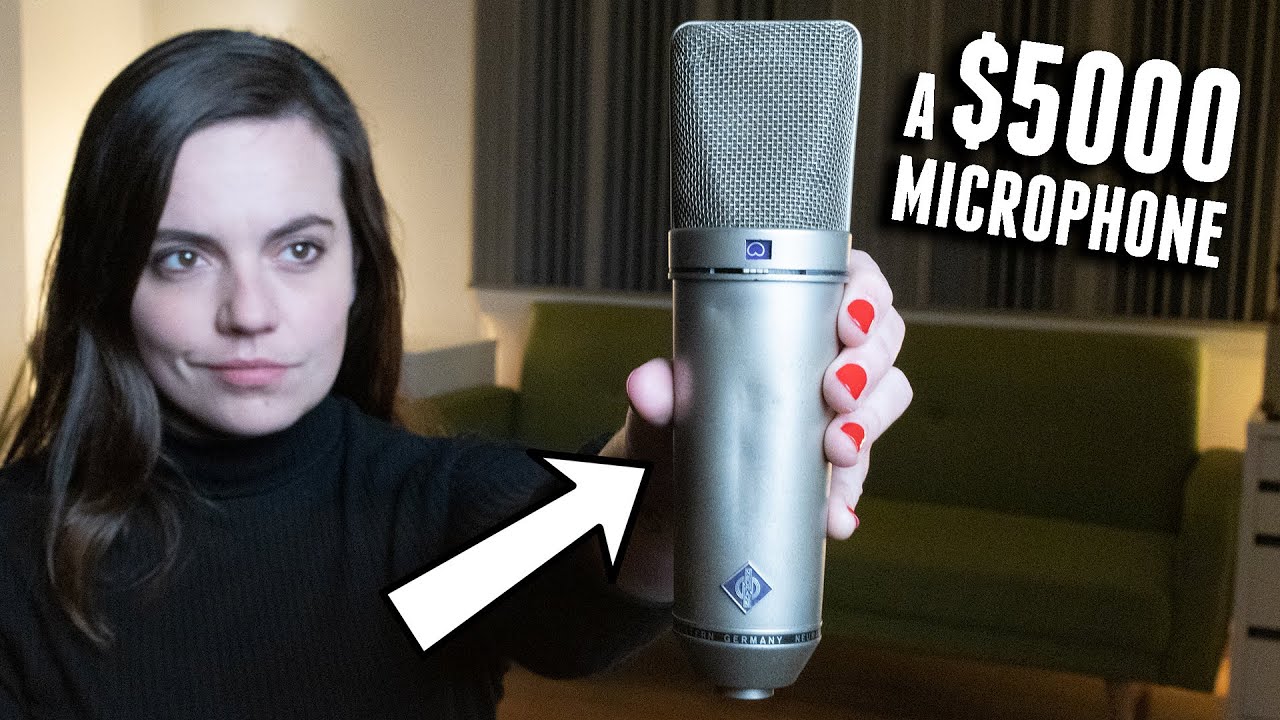
Recording vocals and acoustic guitar together sounds simple, but quite a lot can go wrong. I've put processes in place to protect myself from mistakes when I'm running and gunning, but in this video I wanted to make a 1% improvement on something that sounds amazing when you get it right, and when you get it wrong suffers from phasing or lacks that certain je ne sais quoi you want from a stripped-back performance. My inspiration? A pair of vintage Neumann U87s.
A quick history of the Neumann U87
Neumann, founded in Berlin in 1928, is one of the most prominent German manufacturers of professional microphones. Its founder, Georg Neumann, was a technical genius who also developed record-cutting lathes alongside his high-grade microphones. The U87, launched in 1967, is the company's best-known model and has been one of the most widely used studio microphones in the world for more than half a century: expensive, but synonymous with quality and dependability. It's been used on countless hit records, from classic rock albums to modern pop like Carly Rae Jepsen's "Call Me Maybe", and it's a favourite of radio presenters and broadcasters.
Neumann received a Technical Grammy in 1999 for its achievements, has been part of the Sennheiser group since 1991, and launched its first headphones, the NDH 20, in 2019. The pair I borrowed were probably from around the 1970s.
My set-up
My checklist: two microphone stands, two XLR cables, an audio interface, a laptop, in-ear monitors and an extension lead. I set the mics up while sitting down so I could think carefully about where they needed to be.
- Vocal mic: mounted upside down and angled slightly up towards my mouth, set to a figure-of-eight polar pattern. It's worth picturing what that pattern physically picks up in the room.
- Guitar mic: lower down, pointing towards the guitar, with its top kept away from my voice to reduce vocal bleed. On my 1937 Epiphone Olympic archtop, I aimed it towards the f-holes. You can read about that guitar in my 1937 Epiphone Olympic.
- I kept the two mics as close together as possible to stay intimate with the guitar while managing phase.
Recording in a studio session without cameras and recording on camera are, I'd argue, two different art forms. With a camera to squeeze in as well, you do the best you can, and it may not be perfect studio-level separation.
Checking separation
With no plugins at all on the raw audio, I checked levels and listened for bleed. The guitar wasn't picking up much on the vocal mic, but there was more vocal on the guitar mic, so there was still room for improvement. That's normal when you record both at once, and it's why mic angle and pattern matter so much. For more on this, see my five tips for recording vocals at home.
Why I use in-ear monitors
I set up an in-ear mix with a little reverb just for me and a click track. I love in-ears for intimate acoustic sessions for two reasons: headphones make my head hot, and click bleed from headphones is much worse. With in-ears, it's almost undetectable.
Give yourself time
It took a lot of trial and error. I did a whole session earlier in the day, played the song far too many times and realised I was in the wrong key, so I moved it up a little. The final result was crystal clear and I was really happy with it, but the lesson is to always experiment and give yourself enough time. Hours disappear when you're recording. If you're recording guitar at home, you might also find how I record electric guitar at home helpful.