
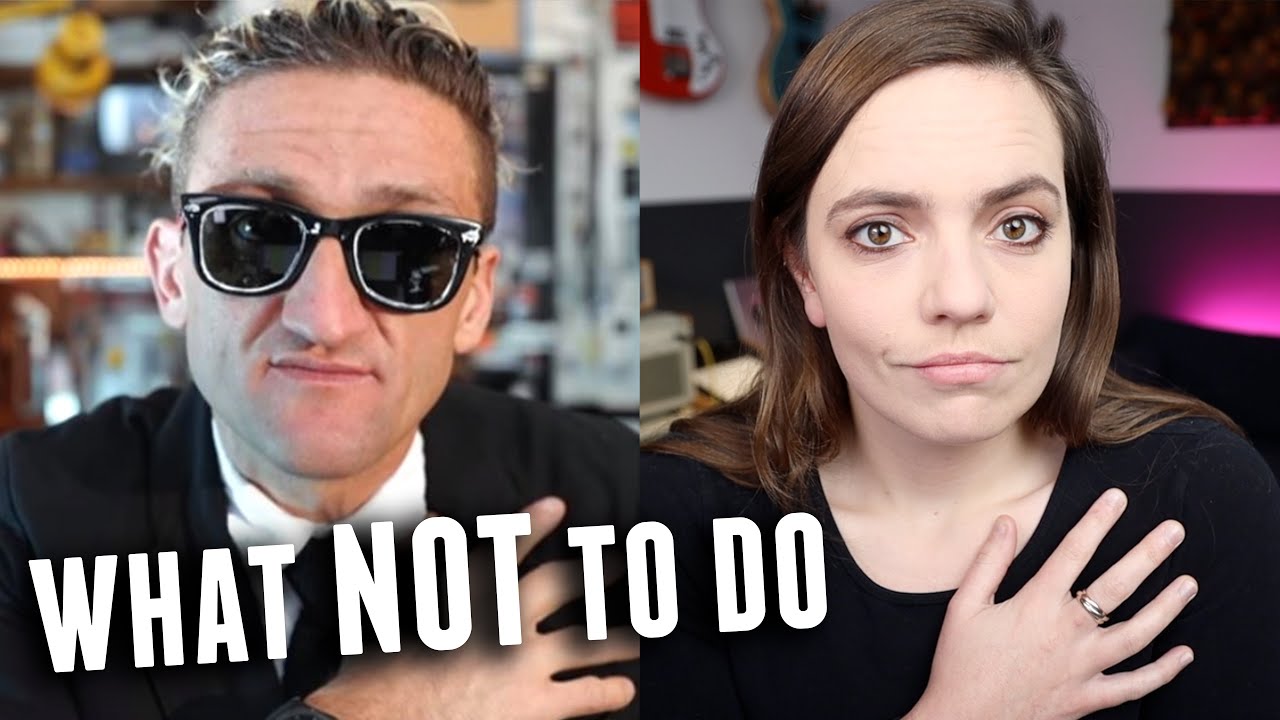
On New Year's Day 2022, I revisited a video Casey Neistat made in 2015, around 40 vlogs into his daily vlogging run. It has millions of views, and I watch it with two personalities. One wants to match his work ethic; the other knows that path leads to burnout. Casey himself eventually stepped back from that pace and has spoken about prioritising his family.
The extreme schedule
In the video, Casey, the man with "work harder" tattooed on his wrist, explains how he maximises every waking second while he's healthy and full of energy, quoting Seneca's idea that life isn't short but that we waste much of it. He's very self-aware that it sounds a little crazy. His day, as he described it, was roughly four hours of sleep, 14 hours of work, three hours of exercise and three hours with family, leaving no free time. When he started the vlog alongside running a company, he stole the hours from sleep.
Back in 2015, I was working nine to five and hadn't properly started YouTube. I tried to work that hard while uploading a video every week, and I failed the first time.
Motivation isn't enough
He was one of the first people I saw in the daily-routine genre showing what you could achieve in a day, and it was inspiring. But motivation only gets you started; then you have to act, and you won't feel motivated all the time. Sometimes I rewatch that video for a glimmer of energy, then try to do my own version. I write about the discipline side in discipline equals freedom.
Stress plus rest equals growth
I no longer follow his rules, because a lot of research since then challenges them. My friend recommended Peak Performance by Brad Stulberg and Steve Magness, and I wish I'd read it sooner. Its core idea is that stress plus rest equals growth. You need a routine and a purpose, but you must alternate between the two. "Stress" doesn't mean stressing out; it means deliberate practice and deep, focused work, followed by genuinely switching off.
Lessons from the book that resonated with me:
- Define a purpose and concrete objectives.
- Remove distractions; put your phone out of sight and out of mind.
- Do one thing at a time. I love to think I can multitask, but really I just do lots of things badly. Listening to a podcast while washing up is fine; juggling a hundred projects in the studio isn't.
- Work in focused blocks of roughly 50 to 90 minutes.
- Adopt a growth mindset, and view stress as your body's natural way of preparing for a challenge.
- Use a pre-performance routine to get focused and positive.
The book discusses athletes and classical musicians, which applies directly to anyone learning an instrument. For practice structure, see how to build good practice habits.
Why sleep matters for musicians
This is where that extreme routine fails musicians and anyone learning a skill. Many high achievers don't know how to switch off and feel guilty whenever they're not working, especially when social media shows someone else releasing an album or running 100 miles. But when you're learning guitar, singing or video production, you need rest and sleep.
When I first started YouTube, I worked my day job and then worked all night. You can see in early videos how exhausted I looked, and I wasn't making my best work. I felt I had to, to escape the nine-to-five, but I now think lack of sleep is why I wasn't improving as a musician then. My biggest piece of advice when learning an instrument is to sleep a lot, because so much consolidation happens while you sleep. Matthew Walker's Why We Sleep is on my reading list. And if you need an excuse for a lie-in, Einstein reportedly slept around ten hours a night and took naps.
Know yourself
Reframe sleep as productive. It's inspiring to see someone take work to the extreme, and if you want to go all in for a few years and burn out, that's your choice. But there are no guarantees it pays off, and I'd rather build something sustainable. For more, read how I beat procrastination and the dark side of ambition.