
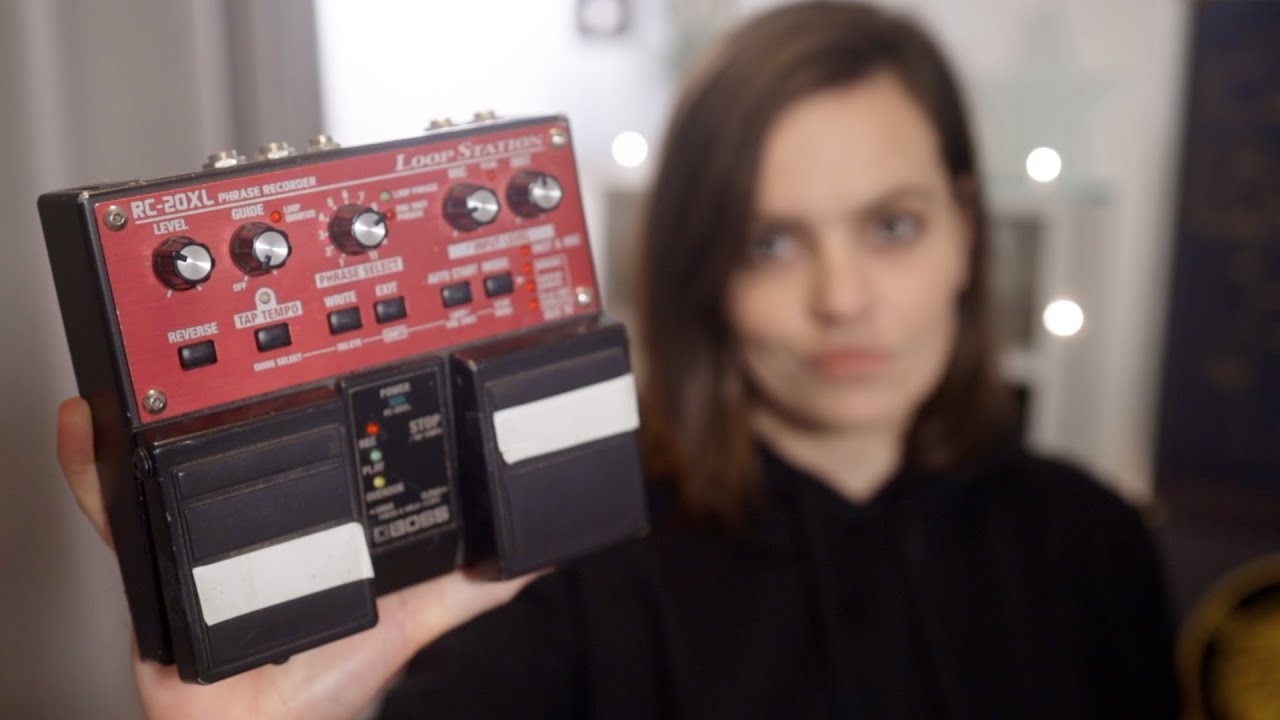
Paul Davids invited me and a few other musicians to take part in a remote collaboration, each of us recording something separately for a grand reveal. For my part, I dug out my old gigging gear: a BOSS RC-20XL loop pedal and a beaten-up Tanglewood acoustic. I used them for four-hour covers sets every Friday and Saturday night and Sunday afternoon in a pub in Bristol, where I used to live. Those cracks in the top of the guitar? They came from playing it percussively, night after night.
My approach to looping: short, sweet, straight to the point
I've always tried to keep my loops short and to the point. In the video I reimagine one of my original songs, "A Little Bit of Madness", using a simple loop as the foundation. If you're new to looping, a few principles help:
- Keep the loop short. A short loop is easier to record cleanly, easier to keep in time, and leaves the audience waiting less before the song really starts.
- Use the body of the guitar. Tapping and slapping the top gives you a percussive layer, so you can build a groove without a drummer. (Just be gentle with guitars you care about.)
- Get to the song quickly. Looping should serve the song, not become the show. Build what you need, then sing.
- Use the loop as a safety net. Once it's running, you can take your hands off the guitar, focus on singing, or improvise over the top. I talk about this in how to sing and play guitar at the same time.
Looping was a huge part of my early career, inspired by KT Tunstall. If you want a guitar built with looping in mind, read my reviews of the Fender Acoustasonic Stratocaster, which I think is a perfect live-looping guitar.
A lesson about borrowing things
Someone asked me to tell the story of something I broke and regret. When I was about 17 or 18, I borrowed my dad's camcorder to make an ambitious music video with my best friend, complete with friends, choreography and a ballroom scene. On the very last shot of the weekend, with Dad waiting patiently outside, someone tripped over the power cable and the camcorder crashed to the floor. Walking out to tell him was mortifying. He was stoic about it, but I've barely borrowed anyone's belongings since.
Tip: practise first thing in the morning
Don't let the day run away from you. If you can, carve out practice time away from your phone, email and other distractions, and for many people the morning is perfect. After a long day of calls and screens, your brain is often too tired to challenge itself on the guitar. I know mornings aren't possible for everyone, especially with early shifts or a sleeping household, so find whatever time is reliably yours. (Though as a night owl, I'd also point you to why some of us can't wake up at 5am.)
For more on practice, read how I practise guitar.