
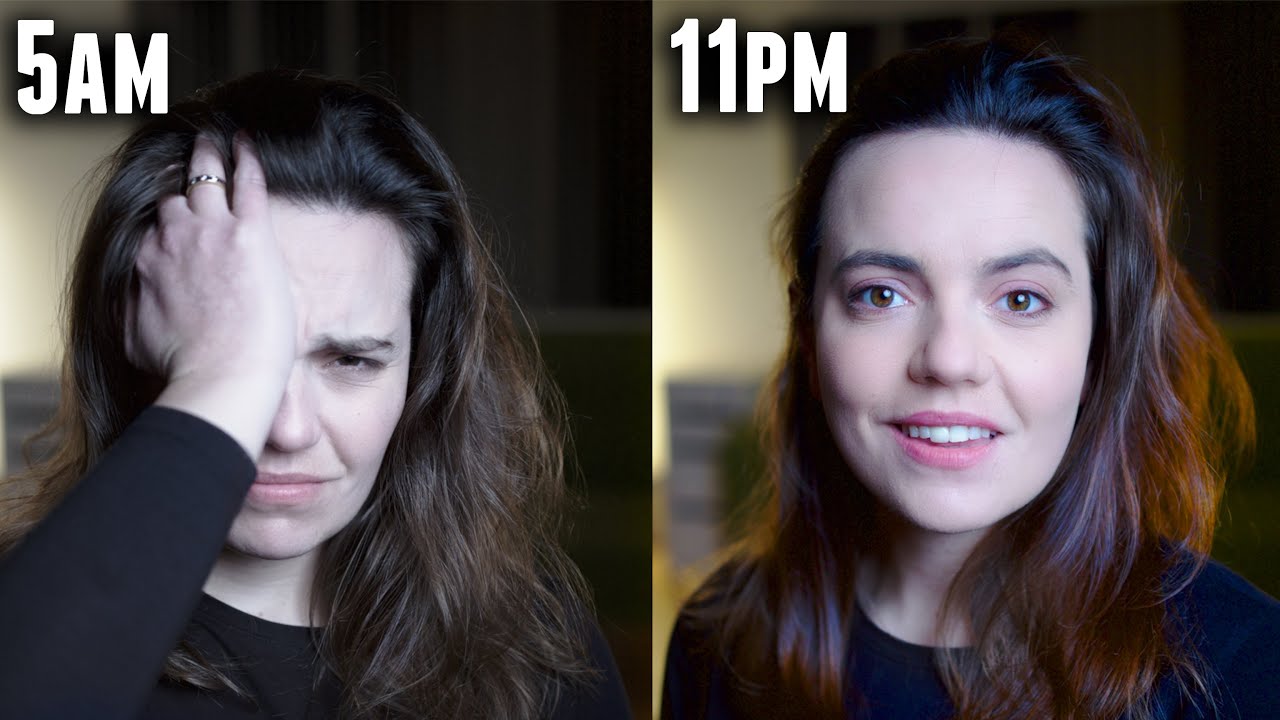
I've always been a night owl, and for about a decade I've felt guilty about not waking up at 5am. Late-night solitude is bliss: just me, my creative work and my thoughts. It's quiet, and new ideas arrive like welcome friends. I've written my best songs late at night, and I like to film and write scripts late too.
I'm in good company. Bob Dylan, Winston Churchill, Fran Lebowitz, Prince, Carl Jung, Tolkien, Christina Aguilera and Vincent van Gogh are all said to have been night people. Taylor Swift framed her album Midnights as songs written across sleepless nights. Of course, it's not true of everyone. The novelist Anthony Trollope famously wrote from 5:30am, a thousand words an hour for three hours, before starting his job at the Post Office. That's not me. I even tried Beethoven's early-rising routine. Mornings and I don't really get on. So I went down a rabbit hole to understand why.
Chronotypes and circadian rhythms
"Night owl" is shorthand for a chronotype that makes you go to bed and rise later, as opposed to early birds, or larks. A chronotype is the behavioural expression of your circadian rhythms: physical, mental and behavioural changes that follow a roughly 24-hour cycle, responding mainly to light and dark. Put simply, it's a set of internal processes that determines whether you like to get up early or stay up late.
Most people sit somewhere in the middle, and our preferences shift over a lifetime. Anyone with teenagers knows that, and many of us rise earlier as we get older. Evolutionary biologists have suggested that groups with a mix of chronotypes were more likely to survive, because the late risers could keep watch while the early sleepers rested.
Coffee, street lights and the Enlightenment
Staying up after dark was long seen as a negative, even sinful, trait. That changed in 17th- and 18th-century Europe with artificial lighting, like street lamps, and a fashionable new drink from Africa and the Middle East: coffee. In This Is Your Mind on Plants, Michael Pollan links the new availability of caffeine to the Enlightenment, when philosophers, politicians and artists stayed up late in coffee houses sharing ideas and plotting revolutions.
What this has to do with songwriting
To write a song, all you need is your instrument and your mind, and getting the most from your mind matters just as much as getting the most from your instrument.
The best ideas often arrive suddenly and unexpectedly, through what's called divergent thinking: the brain unconsciously making new connections between previously unconnected patterns. As I understand it, as your brain winds down for sleep, the parts that keep you focused and on task ease off, giving emotion, memory and free association more room. That's why so many of us get our best ideas just as we're drifting off, and why a random thought can be the key to a problem you've been wrestling with.
When we deliberately sit down to create, the mind throws up endless obstacles: emails to answer, bins to take out, the phone to check. We're quick to doubt ourselves and throw away ideas that seem silly or derivative. A wandering mind is frustrating when you've got set tasks to do, but in creative work it's the key to your best ideas. When it's quiet and the day's work is done, that time is yours alone, and that's when the magic can happen.
Don't feel guilty
It doesn't matter whether you work best late at night or early in the morning. Night owls get a bad reputation for being lazy, but sayings like "the early bird catches the worm" are hangovers from our farming past. Your preference is largely in your genes. Sleep scientist Colin Espie of the University of Oxford compares it to natural variation in height or hair colour: a normal distribution, with people at both extremes and most in the middle.
Getting enough sleep matters too. In Why We Sleep, Matthew Walker explains how sleeping after learning helps you consolidate and retain memories, which is why practice often feels easier the next day.
So stick to the hours that suit you, and don't feel guilty. You don't have to wake up at 4am unless you want to. We all have natural peaks and troughs, so learn what works for you.
If you're ready to put your best hours to use, my songwriting course shares my process, and facing the blank page is about actually getting started.