
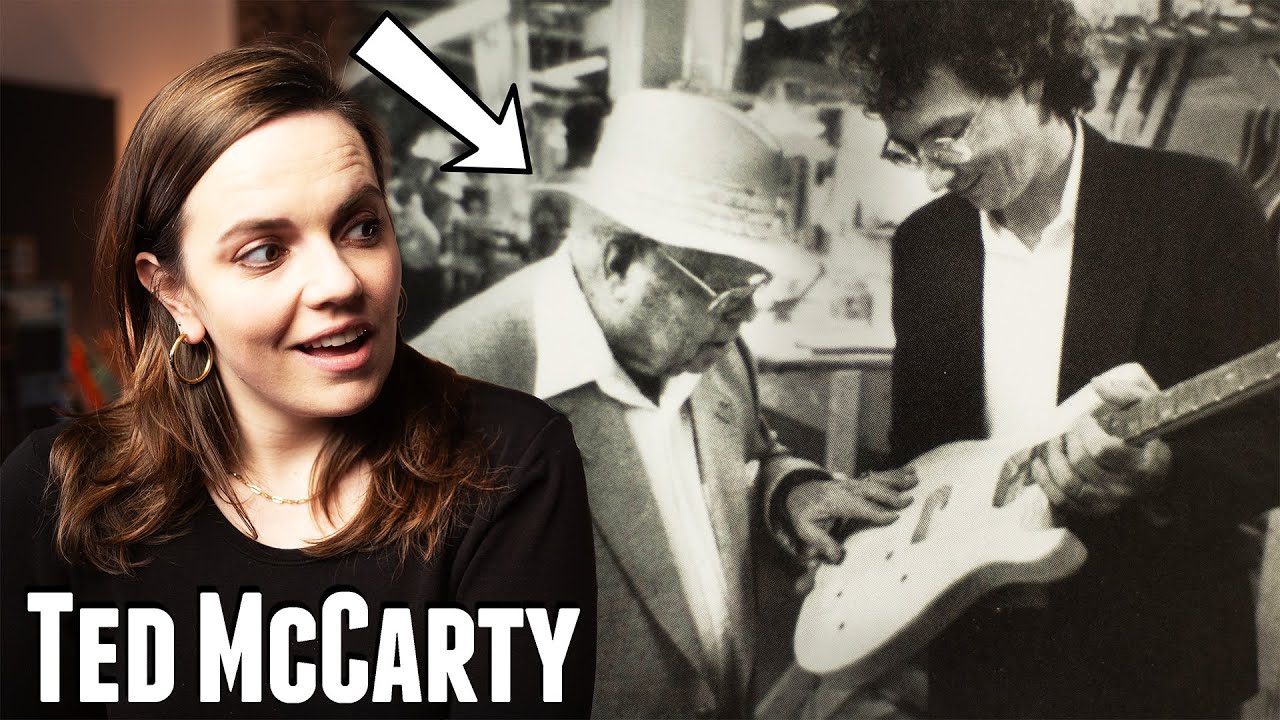
I was given an early preview of a documentary called The Legacy of Ted McCarty, now live on the PRS Guitars YouTube channel. I've been working with PRS recently, and I feel genuinely honoured to help share this story, because it isn't one I could tell properly myself. The people who tell it in the film knew the man.
Who was Ted McCarty?
You might know the name from a PRS model, or have heard it in passing. I certainly had, but I didn't really know why he mattered. And you needn't feel bad about that: guitar history is vast, and the documentary doesn't scold you for not knowing; it simply brings you in. I went in expecting a niche history piece and came out feeling I'd watched a story about mentorship, craft and what it means to be remembered properly.
As president of Gibson through the 1950s and into the 1960s, McCarty helped shape what we now think of as the modern electric guitar. But his name never travelled the way Fender's or Gibson's did, because it was never his company. It wasn't on the headstock or in the marketing; it was folded into the work. The film asks, quietly but firmly, how someone so central to an era can become the forgotten man. Not necessarily because the industry was malicious, but because history tends to cling to logos and brands instead of people.
A relay race, not hero worship
The heart of the film is the relationship between Ted and Paul Reed Smith. It feels less like hero worship and more like a relay race. Paul is building something new but is obsessively curious about what came before: the reasons behind old designs, how things were really made, not just what happened but why. Ted responds with a charming mix of generosity, bluntness and pure engineer's brain. He comes across not as a polished legacy figure, but as someone who spent his life solving problems and fighting fires and didn't expect anyone to care, until someone finally did.
More than a list of guitars
The documentary touches on the big landmarks, and if you're a guitar nerd you'll have plenty of "wait, that was him?" moments. But it keeps returning to the person: Ted as a father, a businessman, and someone who loved music deeply even though he couldn't play. That's a powerful reminder that the music world isn't just musicians. It's built by people who make systems and factories work, who notice problems and refuse to leave them unsolved.
It made me think of sports coaches, who don't always play at their players' level but see the whole pitch. I'm in awe of people whose brains work like that, who look at something that already feels perfect and still see how it could be better. You don't realise you needed the improvement until you experience it, and then you can't live without it.
Leadership and culture
I didn't expect a thread about leadership, but it's there: how a factory becomes a culture, how quality becomes a habit, and how innovation is less one moment of genius than a pattern of daily decisions. Ted walked the floor, spoke to staff, scaled the company and still cared about the details. If you're interested in how instrument making works at scale, read how a Martin guitar is made and what musicians can learn from Fender's business model.
Making sure he wasn't forgotten
As the film moves into the PRS chapter, Ted becomes a living bridge between the golden era of American guitar making and a newer generation trying to do things properly. What moved me most is how seriously Paul takes the responsibility of credit. He insisted Ted wouldn't be forgotten, put his name on an instrument and made sure he was recognised while he was still alive to feel it. Zoom out, and it's a story about what happens when a craft becomes an industry: some people become symbols and others become footnotes, even when the footnotes are holding everything up. Here, the footnote is turned back into a person.
There are anecdotes that feel like myth, the kind that only exist because someone was in the room, plus humour and blunt honesty. By the end, I felt I'd watched a documentary about the beauty of taking things seriously, being a student for life, and the power of an older person realising their knowledge won't die with them because someone younger is hungry to carry it forward.
It's niche, but in the way great documentaries are: specific enough to feel real and human enough to be for everyone. If you'd like to compare PRS's more affordable instruments, read my PRS SE acoustic guitars comparison.