
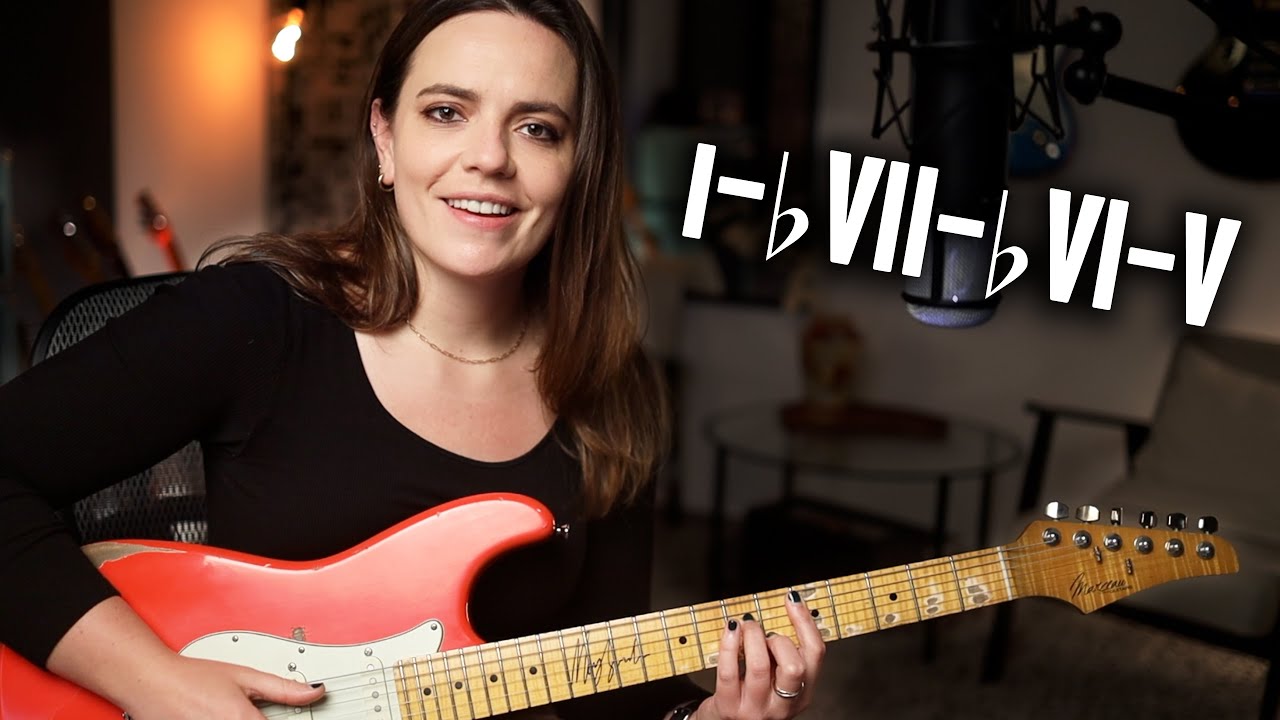
Dire Straits are one of the most iconic British bands of all time: great songs played by brilliant musicians. And Sultans of Swing is where it all began.
A song that came alive on a Strat
The first version was written in 1977 on a National steel guitar in an open tuning. Mark Knopfler has said he found it dull at first. Then he bought his first Stratocaster, a '61, and the song came alive. The lyrics stayed the same but the chord changes fell into place, and that Strat became his main guitar on the first album.
His influences are all in there: blues players like Blind Willie McTell, Lonnie Johnson and BB King, Chet Atkins and the Nashville sound, Bob Dylan, the Shadows, the Everly Brothers, Elvis and Duane Eddy. He got his first electric guitar before he could afford an amp, so he developed a fingerstyle approach on borrowed acoustics in folk and blues clubs.
The music
- Time and tempo: 4/4 at around 149 BPM.
- Key: D minor.
- Verse: a classic descending pattern, D minor, C, B flat, A major.
- Chorus: F, C, B flat.
That descending movement is based on the Andalusian cadence, common in flamenco and Spanish music, which gives the song its slightly exotic flair. It sounds simple, but it's deeply satisfying.
The lead guitar works almost like a second vocalist: each sung line gets its own answering guitar line, a call and response all the way through.
At 5 minutes 46 seconds it's longer than most singles, and the BBC wouldn't play it at first. Live, it would often stretch to ten minutes. If you haven't heard the Alchemy live version, you're in for a treat.
The lyrics
Knopfler gets lots of praise as a guitarist, but not nearly enough as a lyricist. He was inspired after a pint in a nearly empty pub in Deptford, south-east London, watching a band play to an uninterested crowd and then announce themselves with a very grand name. The song is a portrait of every working band that plays for the love of it rather than fame or money.
It's also written in the second person, which is unusual. It puts you, the listener, inside the scene, and it creates layers: he could be talking to you, to himself, or to another character. Try rewriting the opening in the first or third person and you'll hear how much intimacy it loses, and how the extra syllables make it harder to sing.
The characters are beautifully drawn: Guitar George, who knows all the chords but sticks to rhythm on a cheap guitar, and Harry, who's proud of his day job and doesn't need the music to pay. And there's a real tension in 1977, the year of punk, between those old jazz players and the crowd of young lads who couldn't care less about them.
The solos
They're not flashy. They're melodic and expressive and woven into the song like a second voice. He uses dynamics, space and timing, and the phrasing is so fluid it almost sounds improvised, but every note has a purpose. It's the perfect example of taste and tone beating speed. If you love this song, you can probably sing every note of that final solo.
Watch the full story
I made a documentary on the history of Dire Straits, featuring founding bassist John Illsley, which is on Nebula.