
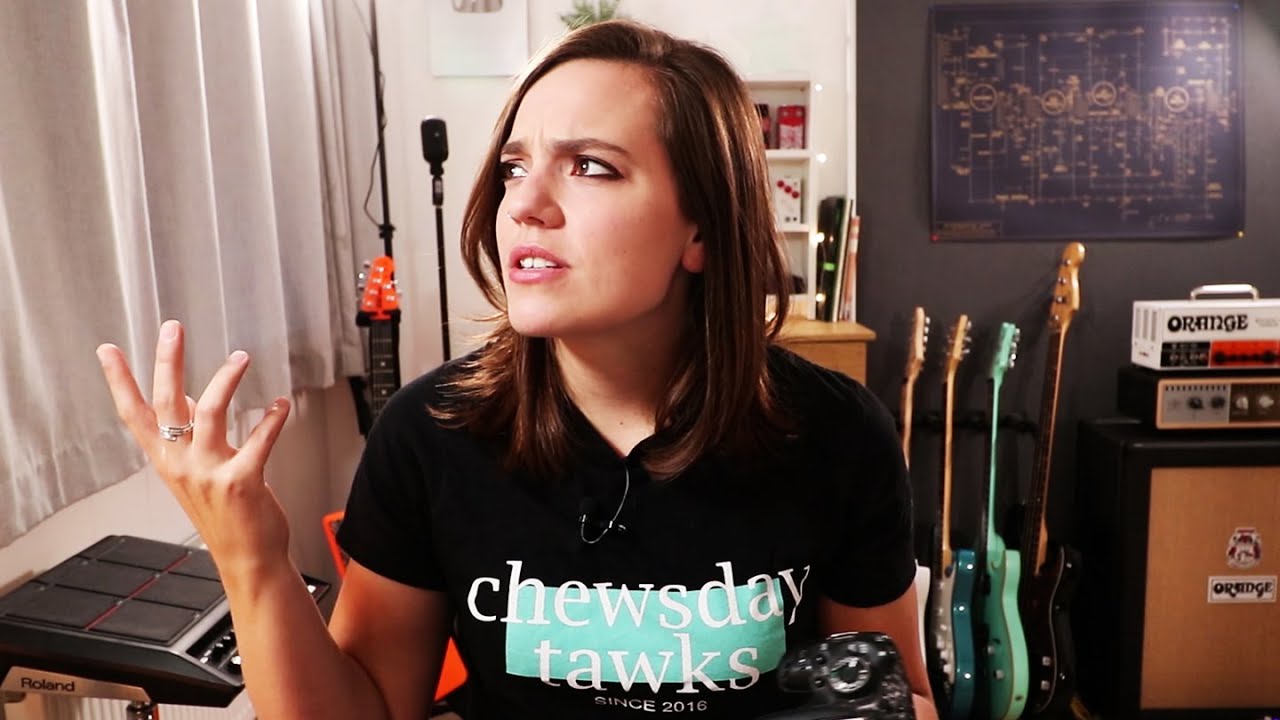
One of the hardest lessons for any musician starting out today is that you can't just be a musician. You still have to work on your craft, play rubbish gigs and write terrible songs until you find your voice. But without a label's infrastructure, strategy and money, you have to learn about everything else that happens behind the scenes. In this video I focus on one of the most valuable of those skills: making music videos.
Wearing many hats
If you want an extraordinary life, you have to work extraordinarily hard; it won't be handed to you. I've found it genuinely creative to learn all the other parts of the job. Being a singer-songwriter is the focus, but I also have to be a content creator, recording engineer, producer, scriptwriter, podcaster, promoter, PR agent, booking agent, my own manager, a business owner, and a filmmaker. Yes, I'm spread thin, but nobody else is going to do it for me. I talk more about this approach in how to start making money as a musician.
Why music videos are a great way to learn filmmaking
If you want to learn to make films, music videos are a brilliant place to start, because the audio is already sorted. Good audio forgives modest video, whereas terrible audio is painful whatever the picture looks like. Having no budget is actually liberating: it forces creativity and storytelling. You can use an old camcorder, your phone or a DSLR. The song has to be strong, and the video has to complement it. Plenty of iconic music videos are incredibly simple.
How I learned
When I lived in Bristol, I met the videographer and drummer Louie Catlett, and we started a project called the Pembroke Sessions. He taught me how much you can do with very little and inspired me to buy my first DSLR. At 23, on a trip to the US, I bought a camera body and a 50mm lens, which I still use, and taught myself to film while travelling.
My first music video on that set-up was filmed in lots of different places, including my face emerging from darkness, shot in my car with an iPhone torch. I made it black and white partly to unify the footage, and partly because I'd left the camera on automatic and much of it was grainy. The story really came together in the edit, which took ages on a very old laptop. Lesson one: make sure your computer can handle video footage.
For another video, I filmed a story on a country walk with two of my best friends, which taught me how to direct people. Friends are very forgiving of mistakes, so recruit them as crew and extras. With no budget, no styled location and no lights, the great outdoors is your set, and I'm always inspired by what's around me.
For "Long Island City", I storyboarded ideas and my friend Adam Neely, who has a great eye, filmed me on the train and in a diner. I shot at 50 frames per second so I could slow footage down smoothly, and I ventured into colour grading, going for a blue-green look inspired by Edward Hopper's painting Nighthawks. Look to paintings and other art, not just music, for inspiration.
My practical tips
- Clean everything on camera. Guitars especially. Otherwise you'll get to the edit and see grubby fingerprints everywhere.
- Have a look in mind before you start filming.
- Shoot in daylight where you can; it's far easier with a low-budget camera.
- Prioritise lighting over the camera. When I started filming indoors, inexpensive lights transformed my footage. Spend on light before you spend thousands on a camera.
- Edit to a click track. If your song has a strong beat and you want cuts on the beat, export a raw click track of the song. It gives you a visual timeline so you can be spot on.
- Document everything. Vlog the recording process and keep your channel active, so when the music video drops, people are already waiting.
It doesn't have to be a big production
A music video can be a live performance, an acoustic take, a lyric video, a studio session or something on location, single-camera or multi-camera. Try them all and see what you find easiest and most enjoyable, because if you're enjoying it, that comes across. I'm now just as passionate about video as I am about music and storytelling, and when you combine the two well, that's when you start building a music career. For more on the recording side, read how I record electric guitar at home and five tips for recording vocals at home.