
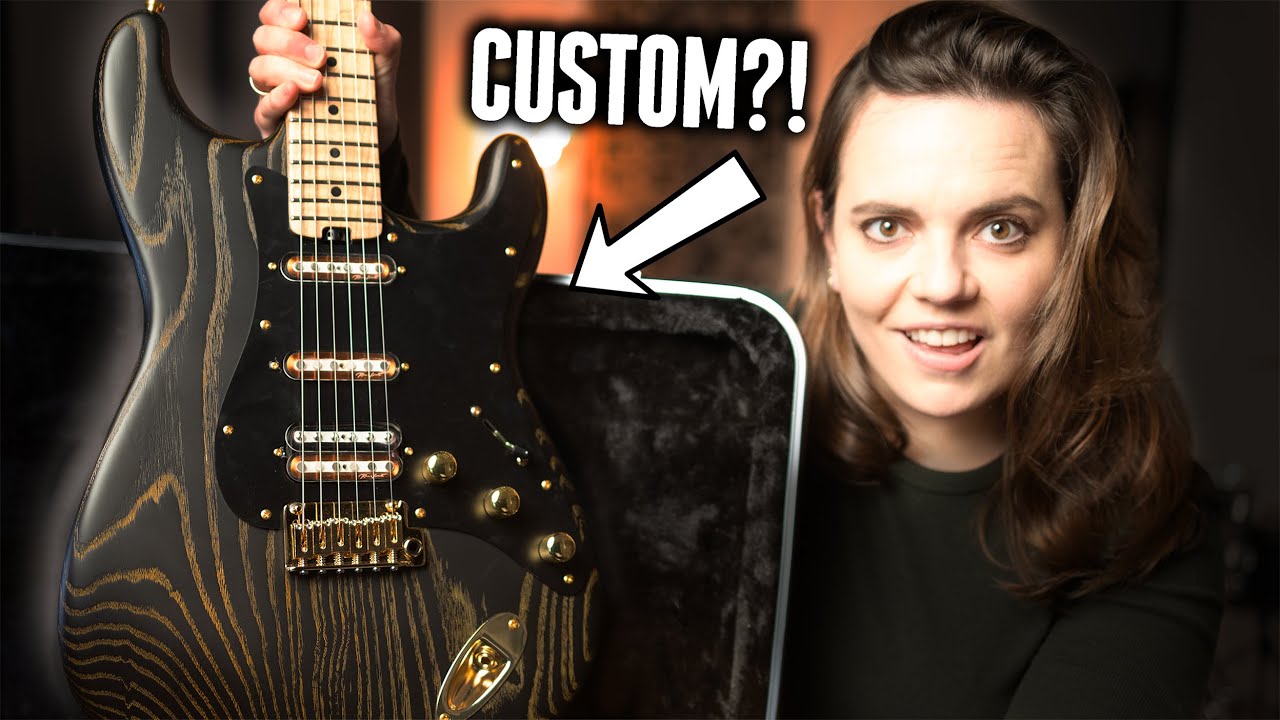
This guitar arrived with a lot of history attached, and that's what got me excited. RJ Guitars sent me their Custom Shop Sky Plus, built in the Philippines by a company that has been quietly making guitars for decades with little attention in the Western guitar world. I'd never heard of them, but once I started reading, I realised this wasn't just another guitar turning up at the studio.
Who is RJ?
RJ Guitars is built around one person: Ramon "RJ" Jacinto, who has been playing electric guitar since the 1950s. As a teenager, he formed one of the first Filipino bands to use electric instruments, and soon afterwards built a recording studio in his parents' back garden, importing multitrack equipment few people in the country had seen. From the start, he wasn't just playing music; he was building infrastructure for it.
In the early 1960s, he founded DZRJ, often described as the country's first rock and roll radio station. New records took months to reach the Philippines, so he had vinyl flown in from the US: The Beatles, The Ventures, Chuck Berry, Elvis. If you heard modern music there at the time, it often came through his signal.
Pinoy rock and a radio revolution
When martial law was declared in the 1970s, DZRJ became a pressure valve. The station championed what became known as Pinoy rock, playing original Filipino music that spoke to life at the time. Bands sent in demos and DJs played them, and a generation found its voice. RJ's stations and family businesses were later seized, and he spent more than a decade in exile, while his music circulated underground at home. During the 1986 People Power Revolution, when state media was silenced, broadcasts urging people onto the streets came from RJ's station, so a rock and roll radio station became a voice of a peaceful revolution. For more on music's role in political moments, read the power of protest songs.
After returning, he opened a venue and played live every week. Tired of swapping between a Fender and a Gibson mid-set, he asked whether one guitar could cover the ground properly. That question became RJ Guitars.
A rare record
RJ Guitars also sent me an original vinyl copy of RJ and the Riots, RJ's 1960s high-school band. It later appeared with a rare five-star rating in Hans Pokora's 1001 Record Collector Dreams, a key reference for serious vinyl collectors, which brought it international attention decades later and led to a reissue. Holding it while looking at the guitar made something click: this is continuity, not nostalgia. The person wiring up rock and roll in the 1960s is still shaping how instruments are built today. For more on why physical records matter, see vinyl and the future of music.
How the guitar feels
- Weight: it's heavy and feels like a solid piece of wood, which may not suit you if you're sensitive to weight.
- Hardware: locking tuners and real attention to detail, unusual at this price.
- Neck: genuinely feels like a high-end guitar.
- Case and presentation: it arrived in a great case, also unusual nowadays at this price.
One thing struck me. Opening that case, with the smell washing over me, I imagined being a beginner unboxing my first electric guitar. This would get you hooked. It made me realise that, while many guitars I demo are impressive once plugged in, the customer experience is sometimes lacking. This was great. One caveat: you can't try these in a local shop, and lead times are long, so you'd need to buy one to get it in your hands.
What it taught me
This guitar opened my mind. There's so much music history from parts of the world that you're simply not taught about if you grow up in the West. It reminded me how much we share across cultures: people who have been displaced or exiled and are still playing guitar and building things regardless. It puts into perspective what a luxury music is, and what a unifying force it can be. Thank you to RJ and everyone at RJ Guitars for letting me be part of the story in a small way. For a comparison with another maker's approach, read Ted McCarty, the guitar world's forgotten genius.