
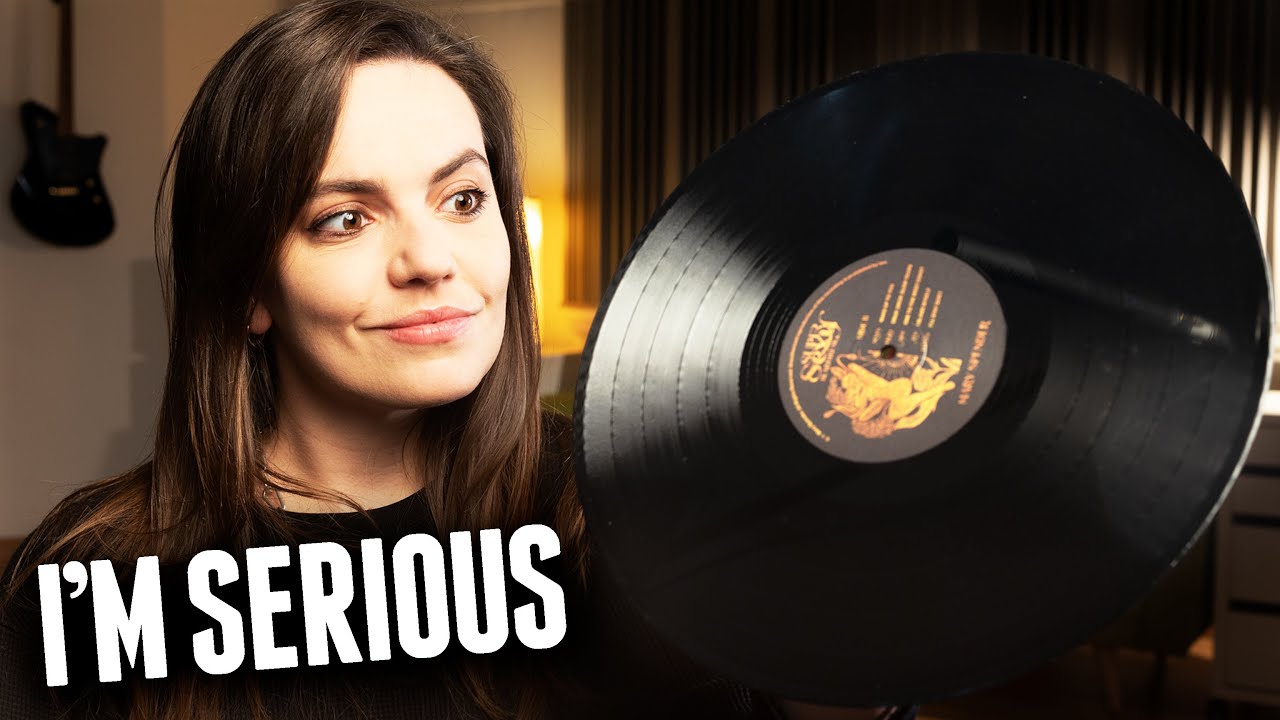
I've got three words for you: sight, sound and touch. Those three senses are why vinyl records are more than music. They're an experience.
- Sight: hunting, browsing the shop, rifling through the racks and finding what you were looking for, or something you didn't know you needed. Then the artwork, full-sized, a companion to the record rather than a tiny thumbnail.
- Sound: warm, rich and full-bodied, with the occasional crackle. Little imperfections are part of who we are.
- Touch: it's an object, not ones and zeros in a cold data centre somewhere. You take it out of its sleeve, it's one of a limited number in the world, and you own it. Maybe for ever, or maybe one day it'll belong to someone else, so you look after it.
Nostalgic fad, or the future of music? Some say records are making a small comeback; others would say they never went away, we just stopped loving them.
The album era
The first iPod arrived in 2001, and early MP3 players before that, so many people in their thirties and forties have never known the full album experience earlier generations had. The LP era really began in 1967, when Sgt. Pepper turned the album from a couple of singles plus filler into a full artistic statement. People sat in their living rooms with the record player as the focal point and heard the first notes of Court and Spark or Blood on the Tracks, alone or with friends.
A story about scarcity
Records created special moments long before that. In 1950s Jamaica, before reggae, dub and ska went global, rival sound systems competed to entertain crowds of dancers with imported American R&B. If you had the best records, you drew the crowd and left your rivals playing to no one. Sound men built ever louder systems, but exclusive records were the real edge, and they were local superstars.
Coxsone Dodd's secret weapon was Willis Jackson's "Later for the Gator", which he'd found in the US and renamed, scratching off the label so nobody could find their own copy. It drove crowds wild for years, until his rival Duke Reid tracked down a copy, advertised a big reveal at a packed dance, and played it, followed by more of Coxsone's signature tunes. The story is told in Lloyd Bradley's book Bass Culture, and it's one of the best examples I know of how scarcity creates a special kind of magic.
What we've lost
Today, listening is global. You can Shazam or search a lyric and have instant access to almost any recording. Scarcity, the secret ingredient of those years, has gone. Of course it worked both ways: people only bought a few records a year, and plenty of duds have been forgotten in favour of the classics. Progress brings real benefits.
But many of us feel the magic has been lost. Unlimited choice leads to scrolling, and scrolling is fundamentally unsatisfying. You aren't hunting and gathering, and you don't own anything. Sharing a song is a couple of clicks: easy, but low-effort. Compare that with a friend pressing a copy of Led Zeppelin IV into your hands and insisting you listen, or finding something nobody else knows yet and watching someone's face as you share it.
Crate digging is hunting and gathering. It speaks to our nature, and it's social too, with shop owners and fellow customers (even if record collectors aren't always known for their open arms).
For more on formats and ownership, read cassette tapes and the future of music and why CDs are back. My own records are in my store.