
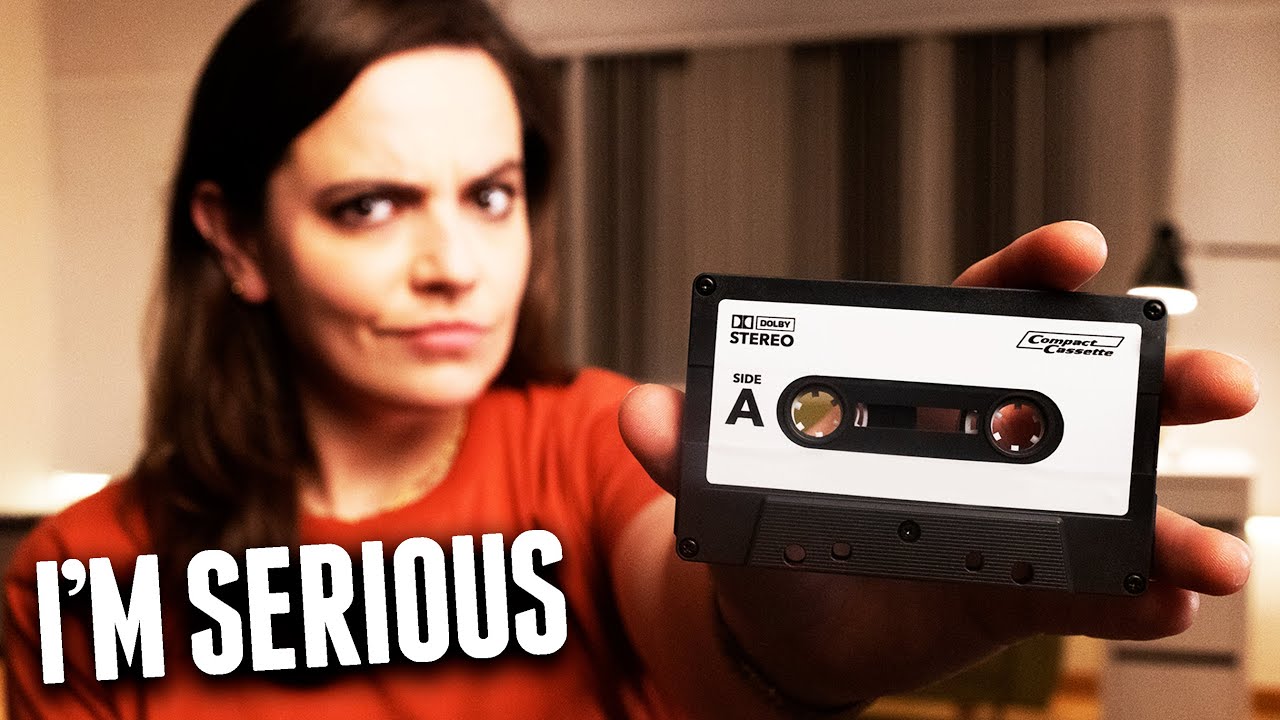
What if the answer to a sustainable music career lay in technology you could almost call Stone Age? Stick with me.
From ownership to access
There have been five main eras of buying music: vinyl, cassettes, CDs, downloads and now streaming. We've enthusiastically traded ownership for access in the name of convenience. Having the world's catalogue at your fingertips is great, but counter-intuitively it can narrow our experience, and I'm not the only one who feels less connected to new releases than to the old ones.
Streaming, designed partly to fight piracy, has in some ways devalued music anyway. Our listening is tangled up with adverts, multiple subscriptions, tiers and algorithms that aren't as personal as they claim. Prices keep rising for access to things we don't own and that can disappear at any moment; Deezer, for instance, announced it was removing tens of millions of tracks it considered fake, unplayed or low quality.
The original peer-to-peer
Cassettes were the original peer-to-peer, from me to you. They were cheap, portable and reusable. Marc Masters, in his book High Bias, describes tapes as meaning freedom: to create, invent and connect. As more musicians try selling directly to fans, they're making a comeback, though some would say they never left.
They'll never be as popular as they were in the 1980s; in the UK they account for well under 1% of music sales. But physical music is rising again. The IFPI's Global Music Report 2024 said physical revenues rose for the third year running, up 13.4% in 2023 to $5.1 billion, about 17.8% of the global market, driven by CDs and vinyl. And if you're content to make a living rather than a fortune, a tiny slice of the market can be enough.
What tapes give us that streaming doesn't
The format isn't perfect. Anyone born after 1990 may be horrified by tape hiss and wired headphones. But tapes are cheap, durable and still look and feel great, and their resurgence shows what's missing from modern music: connection, anticipation, delayed gratification, scarcity and fun.
Tapes helped give birth to whole scenes, including thrash metal, hip-hop, punk and underground black metal, that were ignored by the mainstream and so did it themselves. In the documentary Cassette: A Documentary Mixtape, Henry Rollins reflects on how cloud-served music can't be touched, while analogue is what's left of humanity meeting music.
The man who invented it
The compact cassette was released in 1963. Its invention is credited to Lou Ottens, a Dutch engineer at Philips who also helped develop the CD. Frustrated by fiddling with reel-to-reel tape, he wanted something compact that you could carry, with the spools inside the cassette. His other stroke of genius was refusing to let Philips keep the design to itself: anyone could make it, as long as they met the standard. Mass adoption followed. Ottens was not sentimental about it, though; he considered using cassettes today a rather irrational, nostalgic activity, since it certainly isn't for the sound quality.
Why musicians might consider cassettes
- They're a low-cost memento that lets fans support an artist directly.
- They can be beautiful, with artwork and liner notes, and are often bundled with a high-quality download.
- The maths can beat streaming. Selling a handful of tapes through Bandcamp or your own website can earn more than thousands of streams, and your music stays yours, without a tech company analysing every listening habit.
- You can go as DIY as you like, from dubbing your album onto blank tapes with a second-hand deck, to recording a unique performance on each tape, to using a professional duplication service.
For more on physical formats, read why CDs are back and the birth of music piracy. You can find my own physical releases in my store.