
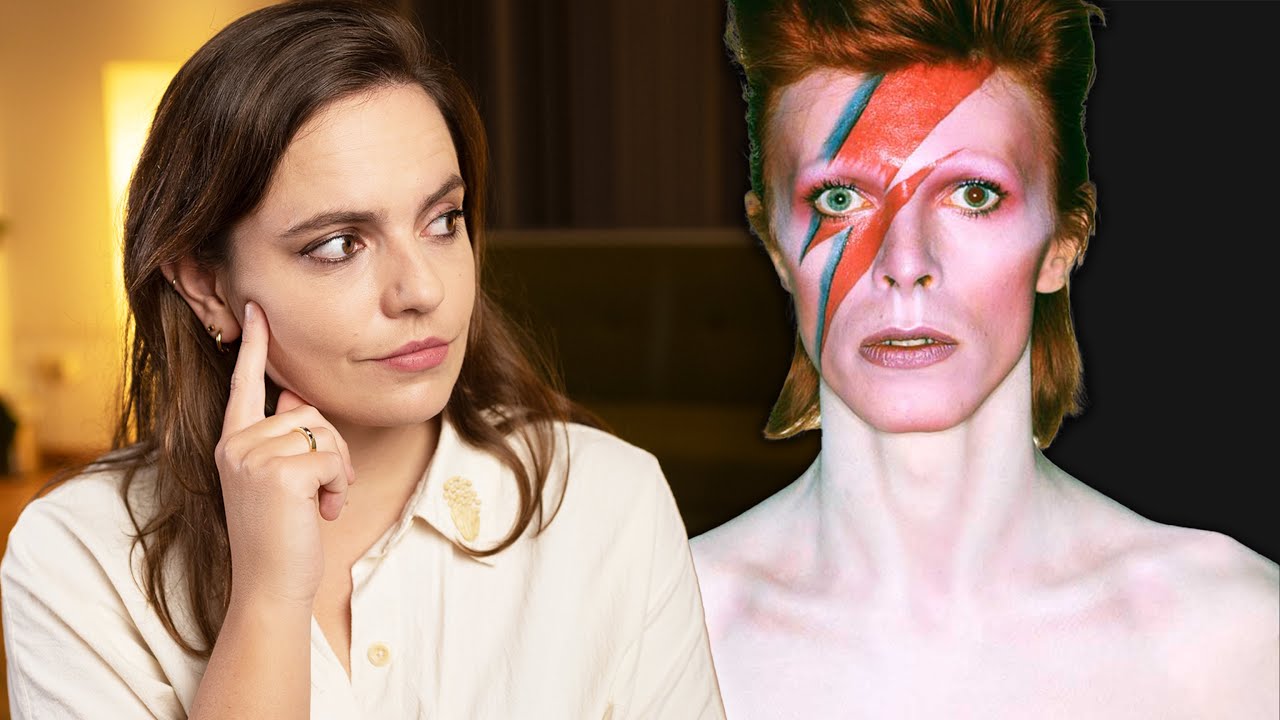
While working on songs for my second album, I've been thinking a lot about creativity and originality. Who were the last great innovators in music? Who are today's truly original thinkers? Will there ever be anyone like David Bowie again? It can feel as though nothing is original any more and everything is just a reaction to something else. In this video I ask whether originality even matters, or whether authenticity should be the focus instead.
Is anything new?
Originality isn't always rewarded. Often it's those who make small tweaks to an existing idea who triumph. The Rolling Stones made fortunes building on what Delta bluesmen earned a few dollars for, and comedy routines like Axis of Awesome's "Four Chord Song" show how many hits share the same chord pattern. If you'd like to explore that, try my article on turning four chords into a song.
I was in the gym recently and heard a club remix whose melody was instantly recognisable as Eiffel 65's late-90s Euro-pop hit. In some genres, that makes sense: why write a new tune when you can license an old one that already carries a memory? People's ears prick up, and both parties win. But it's also derivative, and it feeds the sense that everything is being regurgitated.
Borrowing has always happened
Musicians have borrowed from each other since the dawn of humanity, sometimes credited, sometimes not, sometimes consciously, sometimes not. Led Zeppelin borrowed liberally from blues and folk artists. Many people have noted the resemblance between Nirvana's "Smells Like Teen Spirit" and Boston's "More Than a Feeling". George Harrison was found to have subconsciously copied the Chiffons' "He's So Fine" in "My Sweet Lord".
Ed Sheeran successfully defended a claim that he copied Marvin Gaye's "Let's Get It On", in part by showing that Western musicians work within a limited framework of seven diatonic notes, with only so many combinations that sound good. I think his win was an important landmark, because a loss could have opened the floodgates to many more cases, especially as large companies buy up back catalogues and seek to protect their investments. I look at another landmark case in the Katy Perry Dark Horse lawsuit.
Interpolation and lyrical borrowing
Lyrics have a broader framework than music, but they're hard too, with only so many rhymes and singable syllables. One thing I love about rap is how self-referential it is, rewarding repeat listening with nods to friends' and rivals' songs, almost like lyrical sampling.
Anne-Marie's "2002", co-written by Ed Sheeran, is a clever example of interpolation: a nostalgic look back at the end of youth whose chorus stitches together lines from famous early-2000s hits. It works because it's about teenage nostalgia, so what better way to evoke it than snippets of the music of the time? Interpolation differs from sampling because the material is reinterpreted and re-recorded rather than lifted directly from the original recording.
It isn't only music. Shakespeare borrowed plots for plays like Hamlet, King Lear and Romeo and Juliet and made them his own, and stories in books and film work within familiar structures. My friends Rick Beato and Adam Neely have covered the Sheeran case too; nothing is truly new.
Never play to the gallery
In an interview around his 50th birthday, Bowie advised artists to "never play to the gallery". He said you should remember why you started: there was something inside you that, if you could express it, would help you understand yourself and how you fit into society. He felt it was dangerous for artists to try to fulfil other people's expectations, because that's when they produce their worst work.
I see this in myself. Sometimes I act as my own gatekeeper, shutting ideas down or feeling unqualified to talk about something. It's easy to lose momentum when you're so afraid of alienating your audience that you stop creating for yourself. But an audience isn't one mass with fixed characteristics. It's lots of complex individuals, and the interaction is really one to one, just you and me, like listening to a record. That's why I love this medium.
A creative magpie
Bowie's greatest gift was mixing different elements into something new. He was a creative magpie, drawing on books, films, theatre, fashion and art, always moving forward. He spoke about wanting not just to express himself but to contribute to the culture he lived in and nudge it somewhere more interesting.
The conclusion I've come to is that you have to make what interests you and show how you see the world, rather than making what you think will be popular. Once you lose authenticity, it's game over. So don't get too hung up on originality, but place the highest importance on authenticity and on contributing to the culture. For help finding your own voice, my course The Craft of Songwriting is a good place to start, and my newsletter is where I share regular thoughts on creativity.