
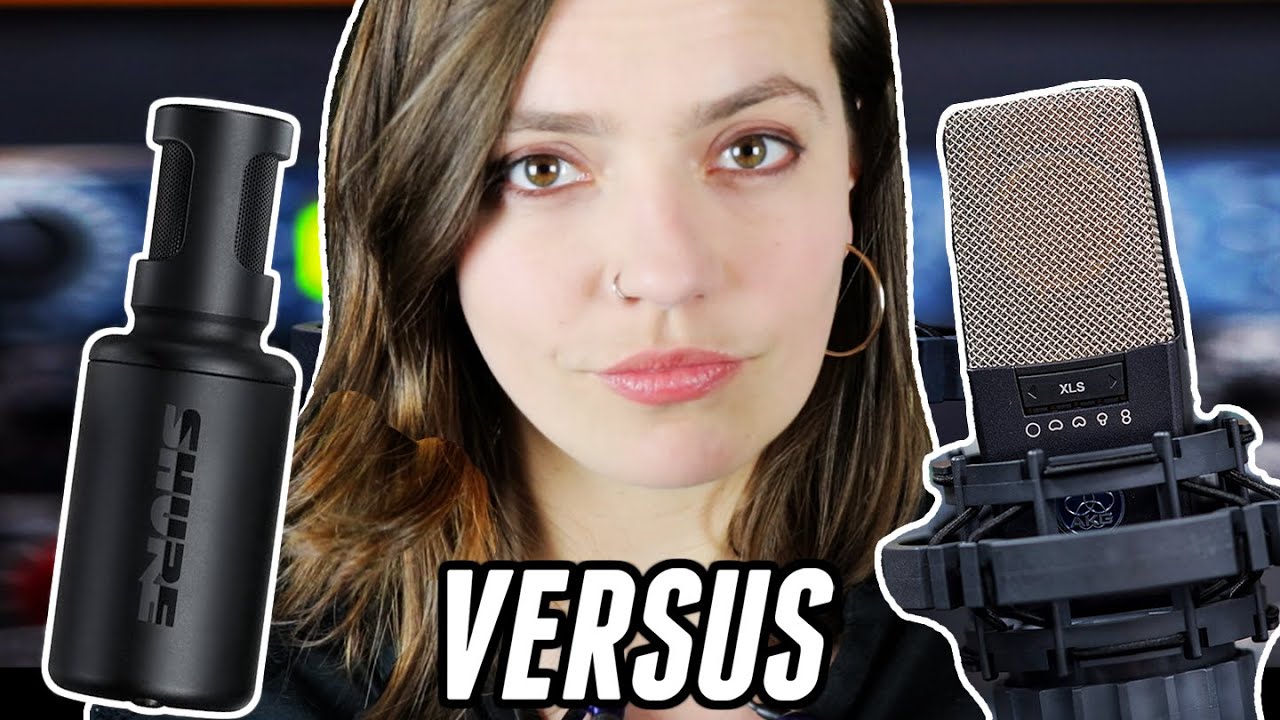
In this episode of Tuesday Talks, I shot out a tiny microphone against a whole professional studio. At Uptown Recording, engineer Rob, who was happy to go against his usual way of working, helped me record an entire track of my original song "Restaurant Window" twice: once through a pair of AKG C414s and the studio's signal chain, and once through a Shure MV88+ plugged into a phone. I played everything myself: drums, bass (yes, through a bass cab), acoustic guitar, electric guitar and vocals. A band of me.
How we did it
The MV88+ records via an app straight into the phone, and you can export WAV files to drop into a session. I recorded a guide track first. Rob's tip was to include some clear, chunky hits at the start, especially on drums, so he could line up the phone recordings with the studio tracks for a true A/B comparison. For a fair test, we kept the MV88+ as flat as possible, using its mid-side stereo mode with compression off and no roll-off.
The first rule of recording drums, by the way: have a drummer, or know how to play drums yourself. The only thing letting the little mic down was my drumming.
The results, instrument by instrument
- Drums: very close. The phone mic had slightly less low end on the snare compared with the C414s.
- Electric guitar: no meaningful difference; perhaps a touch brighter.
- Bass: with light compression and no EQ, the tone was essentially identical. The gain differed only because the studio preamps and the phone's preamps are different.
- Acoustic guitar: with around 30 dB of gain, there was a little self-noise, but Rob pointed out that for a mic costing a fraction of a $2,800 pair of 414s, the tone was amazing, and in a mix you'd probably never hear the noise. He said he wouldn't complain if a client gave him that acoustic sound to mix.
- Vocals: using the mono cardioid mode with light compression and a high-pass filter (most female voices have little below about 75 Hz), it sounded great.
Our verdict
Layered up, it sounded raw and live, like a band of me. Rob's summary was that it's around 90% cheaper but not 90% worse; maybe a 10% difference in quality. You don't necessarily need a $2,000 microphone, especially for field recording or quick capture. And if an expensive studio condenser falls on the floor, its diaphragm can be damaged. Rob said he'd be fairly confident the little Shure would survive.
Where I think a phone mic really shines is documenting ideas quickly, so you capture songs before you forget them without the result grating on your ears, and for live recording on the go. For more on capturing ideas, read how I write a song, and for other mic comparisons, see Shure PGA58 vs KSM8 and my Neumann U87 session.