
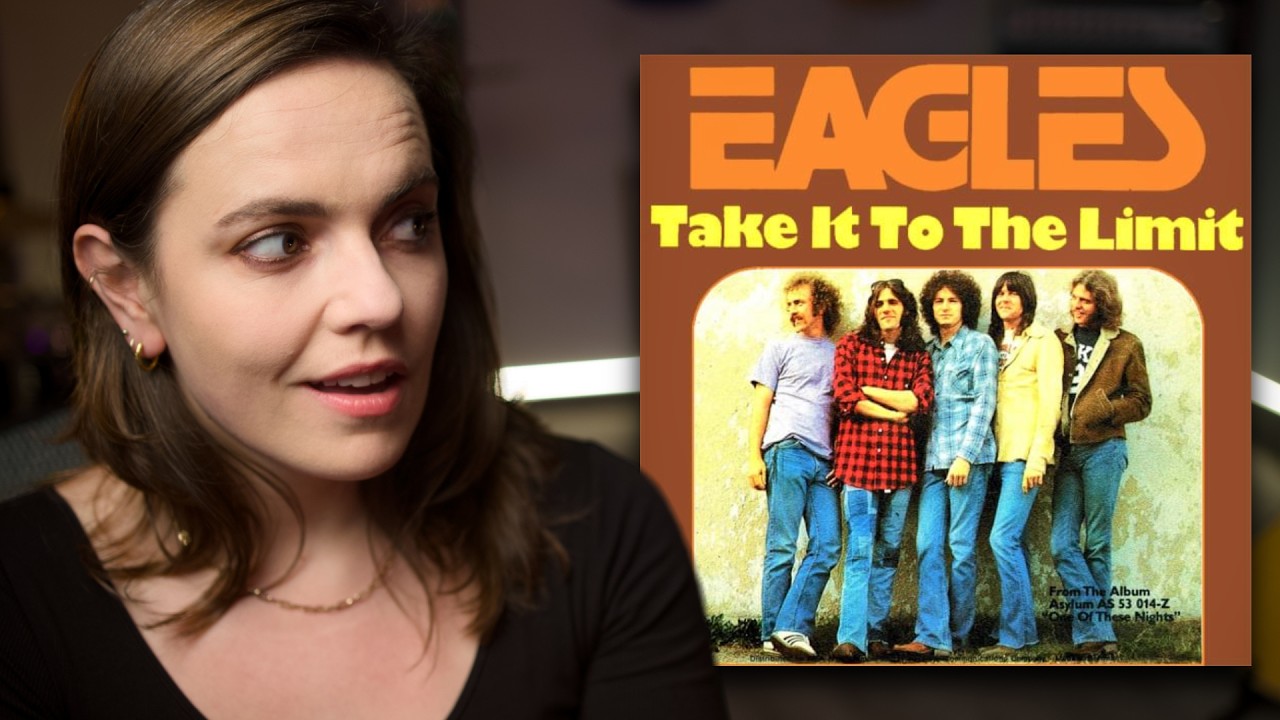
I recently covered "Take It to the Limit" with my friend Chris Buck, and I think it's one of the most perfect songs ever written. In this video I break down why.
Where it came from
The song is from One of These Nights, the Eagles' fourth album, released in 1975. It began with Randy Meisner, who also sings it. He wrote part of it and then needed a little help with the lyrics from his bandmates. You can feel that it comes from someone who's a little lost and restless, working something out in real time.
Simple chords, demanding control
The chords are simple, and it sits in a lulling 6/8 that never rushes. In our version we stripped it right back, kept a hint of harmony, and dropped it two whole tones, because the original key sat awkwardly in my voice.
The range isn't extreme, but the placement is everything. This isn't a song for showing off. It's about control, restraint and sensitivity, and that's where the difficulty lies. If you're a singer, it's a great lesson: choosing the right key for your voice can matter more than how high you can go.
A story of unresolved regret
The opening verse puts us straight into a quiet, reflective space at the end of a night. The narrator thinks about a woman who might have loved him, without ever knowing. That's such a specific kind of regret: not losing someone or being rejected, but never knowing. It's unresolved.
The harmony mirrors that. It moves in small steps with little tension points, like a B7 moving to E minor in my transposed key. Nothing dramatic, just enough to create a sense of unsettled movement at the centre of the song.
Then he tells us who he is: a lifelong dreamer who can't settle down, whose recent dreams keep burning out the same way. It feels autobiographical, from a touring musician four albums in who has built a life around movement without being sure what it has cost him.
A chorus that asks a question
The chorus opens up, and in the original it becomes a waltz. The idea is incredibly simple, but it carries so much weight. Is the title line encouragement or desperation? Is it telling you to keep going, or showing someone who doesn't know when to stop? The song never says.
The second verse turns philosophical, weighing money, love and time, and asks whether someone would stay if everything fell apart. To me, it's about identity without the music: strip away the talent, career and image, and what's left? Would anyone stay for that? Running through it all is the tension between freedom and stability. Freedom sounds romantic, but it can be isolating.
Space in the arrangement
The original is a big production with strings, band and harmonies. It sounds expensive, but never crowded; everything has space. The lead vocal feels slightly distant, almost like a memory, and the harmonies support and lift it without overpowering it.
One of the biggest dynamic shifts comes in the chorus, where Meisner is left almost alone on the title line before the arrangement swells again. Those moments are crucial, because if everything is big, nothing feels big. The repeated choruses then lead into a long fade. We ended ours a little sooner.
In our version, Chris Buck's guitar solo is a masterclass in improvisation: dynamic in volume and in how much of the fretboard he uses, with phrasing you could sing. He has a real voice on the instrument; check out his band, Cardinal Black.
Why it's perfect
For me, the song feels like the open road: California, long drives, possibility and uncertainty all at once. It doesn't give you answers or tell you what to do. It sits with you in the moment where you're not sure whether to keep going or stop, and somehow that's enough.
Read more of my song breakdowns: why "Dreams" is perfect and why "Sultans of Swing" is perfect. If you want to write songs with this kind of restraint, my songwriting course is a good place to start.