
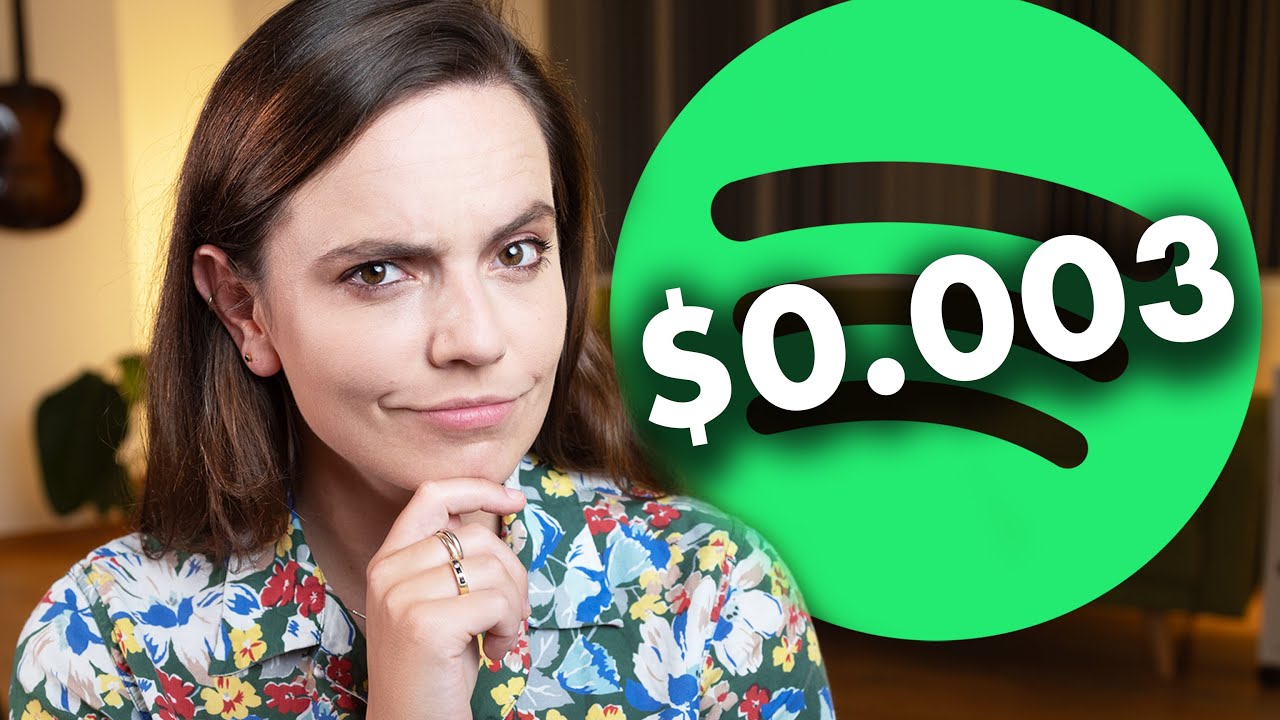
When I was preparing to release my debut album, Super. Sexy. Heartbreak., I made it available to pre-order on physical formats first. A comment on my update video asked a great question: as a streaming subscriber, wouldn't a decade of streams give an artist a better return than one CD that sits on a shelf? In this video I answer it with my own numbers.
Yes, I'm part of the problem
I subscribe to Spotify, YouTube Premium and Apple Music. Being able to play almost anything in a few clicks is incredible. It has broadened my taste, the algorithmic recommendations are genuinely brilliant, and for artists, getting on a popular playlist is still one of the best chances of being discovered. But my relationship with music has changed. Even with artists I love, I don't cherish the work in the same way; new releases get saved and forgotten. And there are real downsides for artist income.
My own streaming numbers
At the time, I had around 4,000 monthly listeners on Spotify, meaning unique users who streamed my music at least once in a 28-day window. That's tiny next to major-label artists with tens of millions, but I hadn't put as much time into Spotify as YouTube, and I was only just releasing my first album. A stream only officially counts after 30 seconds, which is partly why so many modern songs have done away with long intros.
- "Primrose", my most-streamed song, released as a single in 2019, had earned roughly $1,388 from Spotify over about four years, with Apple Music and Amazon Music together roughly comparable. That works out at around a third of a cent per stream. Tidal, by comparison, paid noticeably more per stream.
- "The Great Wave", released in March 2022, had about 38,500 streams, earning around $154, or roughly $0.004 per play.
"The Great Wave" was recorded at Birmingham Conservatoire with a string quartet and cost roughly $4,000 to record, mix and master. At that rate, it would take about a million streams just to break even. If an album has ten tracks of a similar cost, call it ten million streams.
What about a living? Using the US federal minimum wage of $7.25 an hour, roughly $14,000 a year, and an average of around $0.003 per stream, I'd need more than 4.6 million streams a year to earn minimum wage. Meanwhile, every person who pre-ordered my album was worth about 833 Spotify streams.
How Spotify actually pays
Spotify doesn't pay a fixed rate per stream. It pools net revenue from subscriptions and ads, after deducting things like taxes, payment processing and sales commissions, and divides it among rights holders according to "stream share": the proportion of all streams in a month that belong to music they own or control. Spotify says it pays out roughly 70% of its revenue this way. Rights holders then pay artists according to their individual deals, and label deals are not always generous to artists, to put it politely.
Artists who pushed back
Some big names have tried to resist. Coldplay, Beyoncé and Adele have delayed new releases on streaming by weeks or months. Taylor Swift famously pulled her catalogue, arguing that streaming didn't fairly compensate creators, before later returning. In 2014 the band Vulfpeck released Sleepify, a completely silent album, and asked fans to play it on a loop overnight; Spotify removed it, but not before the band had reportedly earned around $20,000. Thom Yorke has been an outspoken critic, and Radiohead have used delayed windows for releases.
Radiohead's 2007 album In Rainbows, released at the height of the piracy era as a pay-what-you-want download, was hailed by some as one of the most important releases in recent music-business history and criticised by others, including Lily Allen, for implying music needn't have a fixed price. Even with plenty of illegal downloads, the band reportedly made millions very quickly. But they had years of major-label support behind them building that fan base. I cover that era in the history of music piracy.
Physical sales and the old model
Traditional physical and download sales weren't necessarily kind to artists either. On a major-label album, an artist might receive only a small percentage after distribution, manufacturing, retail and tax, and the label recoups its costs, from recording to that celebratory steak dinner, out of the artist's share. Distribution fees made more sense when they meant warehouses and lorries than when they mean uploading files.
Why I sold physical first
So, one CD sale is worth a great many streams. I put my heart and soul into the record, and I sat at my kitchen table hand-signing CDs and stuffing envelopes to make it a beautiful object. Pre-orders also came with a high-resolution download, so you didn't even need a CD player. I planned to release the album track by track on streaming services afterwards. For my wider thoughts, read what happened when I spent six months without Spotify, streaming, mega-hits and YouTube and what a $99 album taught me about true fans.
If you'd like to support my music, you can find my records in my store, and following me or adding my songs to your playlists on your streaming service of choice helps too.